

Artificial intelligence is changing the landscape design world faster than we think. At Aspen, we’ve seen homeowners who bring AI-generated landscape concepts to us before starting a project. Although these images can be incredibly useful for exploring ideas and visualizing possibilities in your backyard, we’ve seen a gap in about what AI can account for and cannot account for.
Many homeowners are surprised to learn that an AI-generated image doesn’t evaluate things like site grading, drainage, utility locations, construction requirements, local regulations, budget concerns, or how the space will function over time. Because of this, a design that looks perfect on screen isn’t always practical or possible to build exactly as shown.
That’s not a flaw in technology. In fact, AI can be a valuable tool. The key is understanding where AI excels and where professional landscape design still plays an essential role.
Why is AI Landscape Design Growing in Popularity
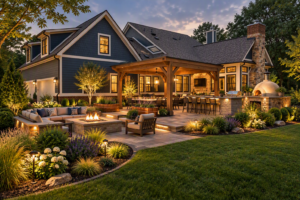
It’s obvious why AI has become so popular. It has made homeowners able to explore design ideas, outdoor living spaces, patios, fire features, outdoor kitchens, and planting concepts in a matter of seconds or minutes. What once required hours of searching for the perfect picture and inspiration boards can now be generated almost instantly and puts your own backyard into account.
For many people, AI helps put ideas into visual format and creates excitement about what’s possible for their property.
And that’s a great place to start!
What AI Doesn’t Know About Your Property
Every property comes with its own opportunities and limitations.
While AI can create beautiful visuals, it doesn’t fully understand the conditions that make each landscape project unique.
- Site Grading and Drainage
- One of the most important parts of a successful landscape design happens beneath the surface. Water movement, drainage patterns, and site behaviors all impact how a space performs long after installation
- Structural Requirements
- Outdoor structures, retaining walls, fireplaces, kitchens, and other hard-scape features require proper engineering and construction methods. What works visually in a rendering may not always work.
- Existing Site Conditions
- Utility locations, easements, setbacks, soil conditions, mature trees, and municipal requirements all influence what can be built and where. These are factors that require a detailed understanding of the property itself.
The Difference Between an Image and a Design
This is where many misconceptions arise. AI is excellent at creating an image. Landscape design is about creating space.
A successful outdoor living environment should not only look beautiful but also function naturally, fit the property, support long-term performance, and align with how a family intends to use it.
At Aspen Outdoor Designs, we’re thinking about questions such as:
- How will people move through space?
- Where will guests naturally gather?
- How does sunlight impact the patio throughout the day?
- How will drainage affect the project over time?
- How will plantings mature in five or ten years?
- How can we maximize value within the project’s budget?
These are the details that transform a concept into a successful outdoor living space.
How We Use AI
We’re not anti-AI. We actually think it can be a helpful tool for brainstorming and gathering inspiration.
The issue is that AI often creates a picture of what’s possible without considering whether it’s the right solution for the space. We’ve had clients bring us AI-generated designs that looked incredible but didn’t necessarily fit how they planned to use their backyard or what they were hoping to achieve.
A successful outdoor living space is about more than creating a beautiful image. It’s about understanding how the space will function, how it connects to the home, and how it serves the people who use it every day.
AI can help spark ideas, but thoughtful design still requires experience, creativity, and a human understanding of what makes a space truly enjoyable to live in.
The Best Projects Start with Inspiration
Whether inspiration comes from AI, Pinterest, social media, magazines, or a neighbor’s backyard, every great project starts with an idea. The most successful outdoor spaces combine creativity with practical solutions. They balance aesthetics, functionality, and long-term performance to create environments that are enjoyable for years to come.
AI can help spark the vision. Thoughtful design brings that vision to life.
Final Thoughts
Artificial Intelligence is an exciting tool, and it’s becoming a bigger part of how homeowners explore landscape design. But even the most impressive AI rendering can’t replace the experience that comes with understanding how your space will function in the real world.
We embrace new technology and recognize the value AI can bring to the design process. When paired with experience and thoughtful planning, it can be a powerful way to help bring a vision to life.